
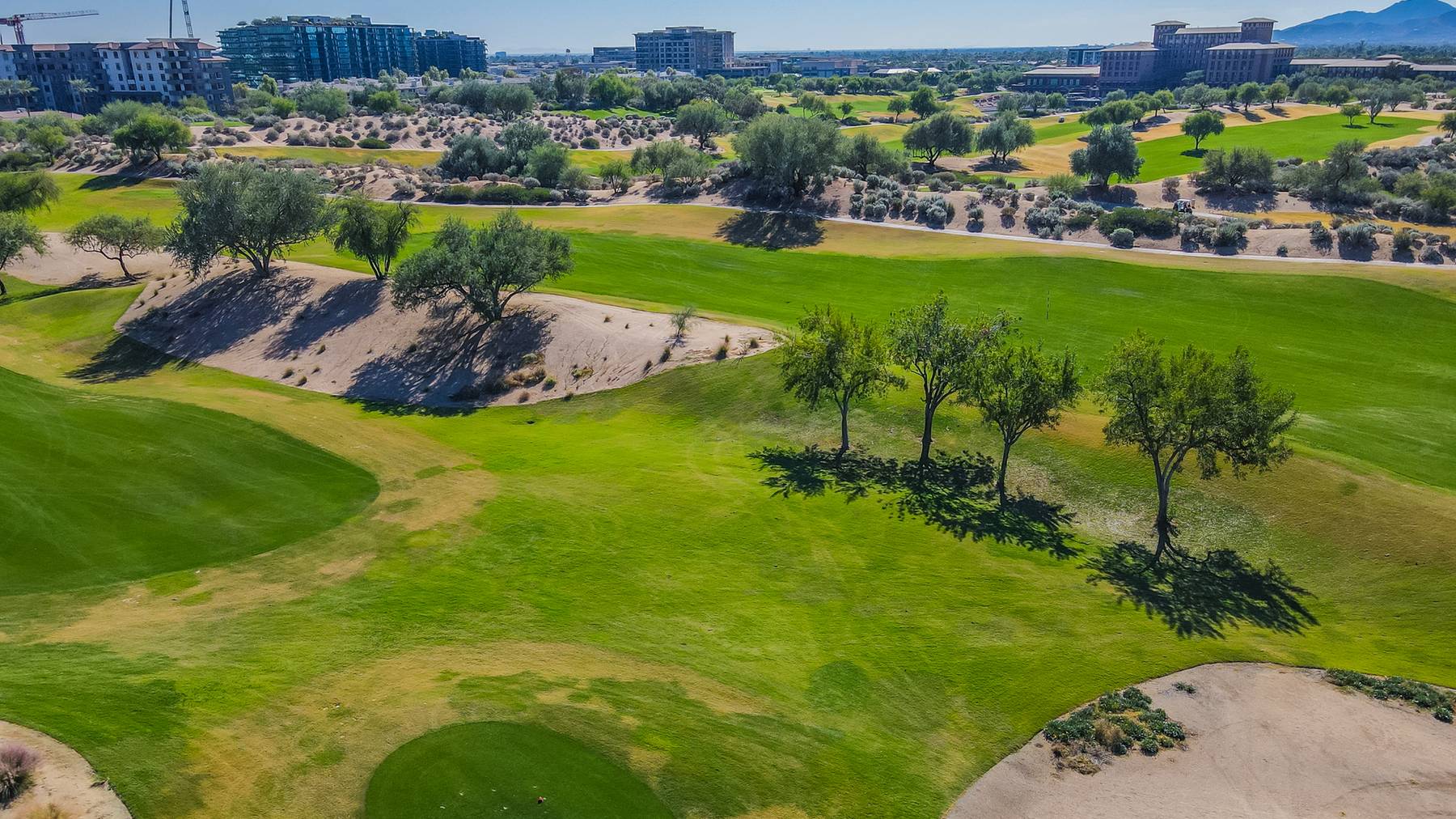
Buyers ask me this on tours in Grayhawk, DC Ranch, Troon North, Desert Mountain and Silverleaf. The headline is statewide. The answer that should change an offer is local. Here is what is on the record this week, and the questions I want answered before anyone writes on a fairway lot.
What Did the Attorney General Actually Say?
Axios Scottsdale reported that Mayes has faced pushback for saying Arizona "probably" has too many golf courses. The same story says she later clarified that she has no plans to close them and instead wants incentives to "swap thirsty grass and catch rainwater." Axios also reported that Arizona Chamber executive vice president Courtney Coolidge wrote that closing courses would do little to address the state's broader water challenges while sacrificing economic benefits.
I tell my clients to read the clarification before they read the headline a second time. The sentence on the record is about incentives to use less grass and to catch rainwater. It is a policy argument. It is not a closure order for Grayhawk, DC Ranch, Troon North, Desert Mountain or Silverleaf. I am not taking a side in that argument. I am separating it from the house you are deciding whether to buy.
What Is Actually Proposed at Kierland?
The live land-use case is at Kierland, and it is specific. Axios reported that Host Hotels & Resorts is seeking a rezoning to build condos, houses, townhomes and duplexes on the nine-hole Mesquite course. The story says the revised plan is about 500 homes, lowered from as many as nearly 800, on 72 acres near the Scottsdale-Phoenix border. Axios reported that the club's other two nine-hole courses would remain untouched.
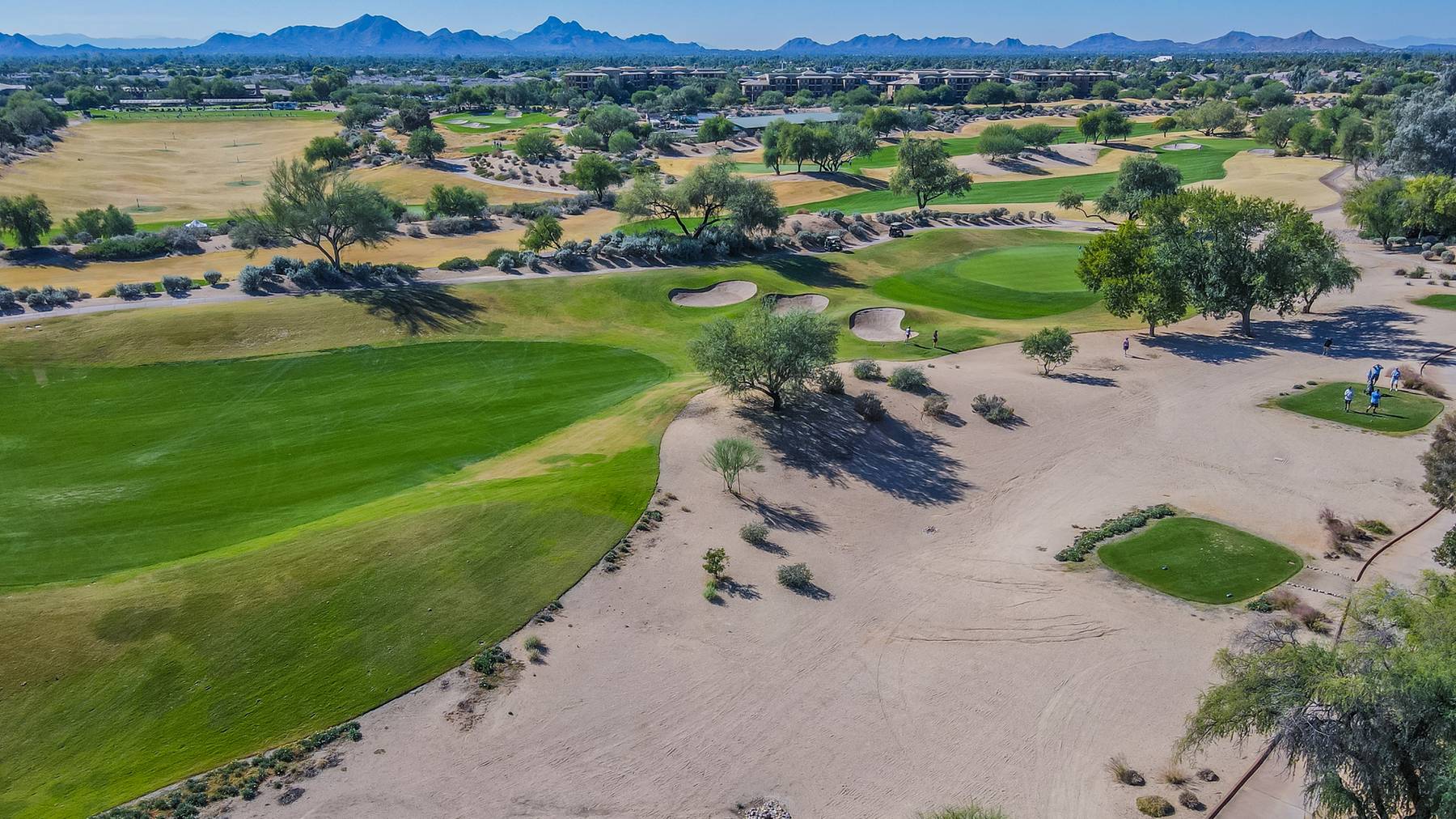
Axios said the Paradise Valley Village Planning Committee will consider the project, called Copper Residences, on Monday. That story is dated October 29, 2026, a Thursday, so that Monday is November 2, 2026. If the committee advances it, Axios reported the path is the Phoenix Planning Commission and then the Phoenix City Council. Paradise Valley Village is a Phoenix planning area. This is a Phoenix hearing schedule. It is not a Scottsdale City Council vote on North Scottsdale courses, and it is not the Town of Paradise Valley.
Axios reported that state Rep. Matt Gress asked the committee to reject the plan, citing the number of homes, traffic, drainage and the loss of the fairway. The Kierland Community Alliance also wants the committee to reject it, Axios reported, while Host says the revision includes more parks and public trails. Axios added a distinction I want buyers to keep: the developer is not pitching the project as a response to the state's water crisis, and water savings compared with the golf course are still one of its major selling points.
That is the useful example. A course can change because a private owner asks a city to rezone the land, and the neighbors, the committee and the council all get a say. I tell buyers to use Kierland as a checklist for documents and process. I do not use it as a forecast for every fairway in North Scottsdale.
How Do Many North Scottsdale Courses Get Water?
The City of Scottsdale's Advanced Water Purification page, last updated April 14, 2026, says that since the early 1990s the city has provided non-potable water to 23 golf courses in north Scottsdale through the Reclaimed Water Distribution System, a public-private system called the RWDS. The city says the system can deliver 20 million gallons a day of non-potable water for turf irrigation to member clubs.
The same page says the RWDS was conceived and negotiated by Desert Mountain Properties and the city as a way to end north Scottsdale golf courses' reliance on groundwater for irrigation. It says Desert Mountain and 12 other golf clubs have invested $30 million to build and fund capital improvements, and are contributing a subsequent $22.5 million toward expansion of the Advanced Water Treatment Facility. The city says it owns and operates the RWDS, and that member clubs pay for their own water purchases and for 100 percent of the system's collective maintenance, operation and capital costs. In months when courses do not need their full allotment, the city says it uses excess purified water for aquifer recharge.
The page names Desert Mountain in that history. It does not, in the section I am citing, publish the full list of 23 courses. I will not guess whether Grayhawk, Troon North, Silverleaf or DC Ranch is on it. Ask the club, and ask in writing. Desert Mountain is the club the city names. Our Grayhawk living guide, DC Ranch comparison, Troon North guide and Silverleaf Club guide cover how those communities are set up. None of them replaces the club's own statement of its water source.
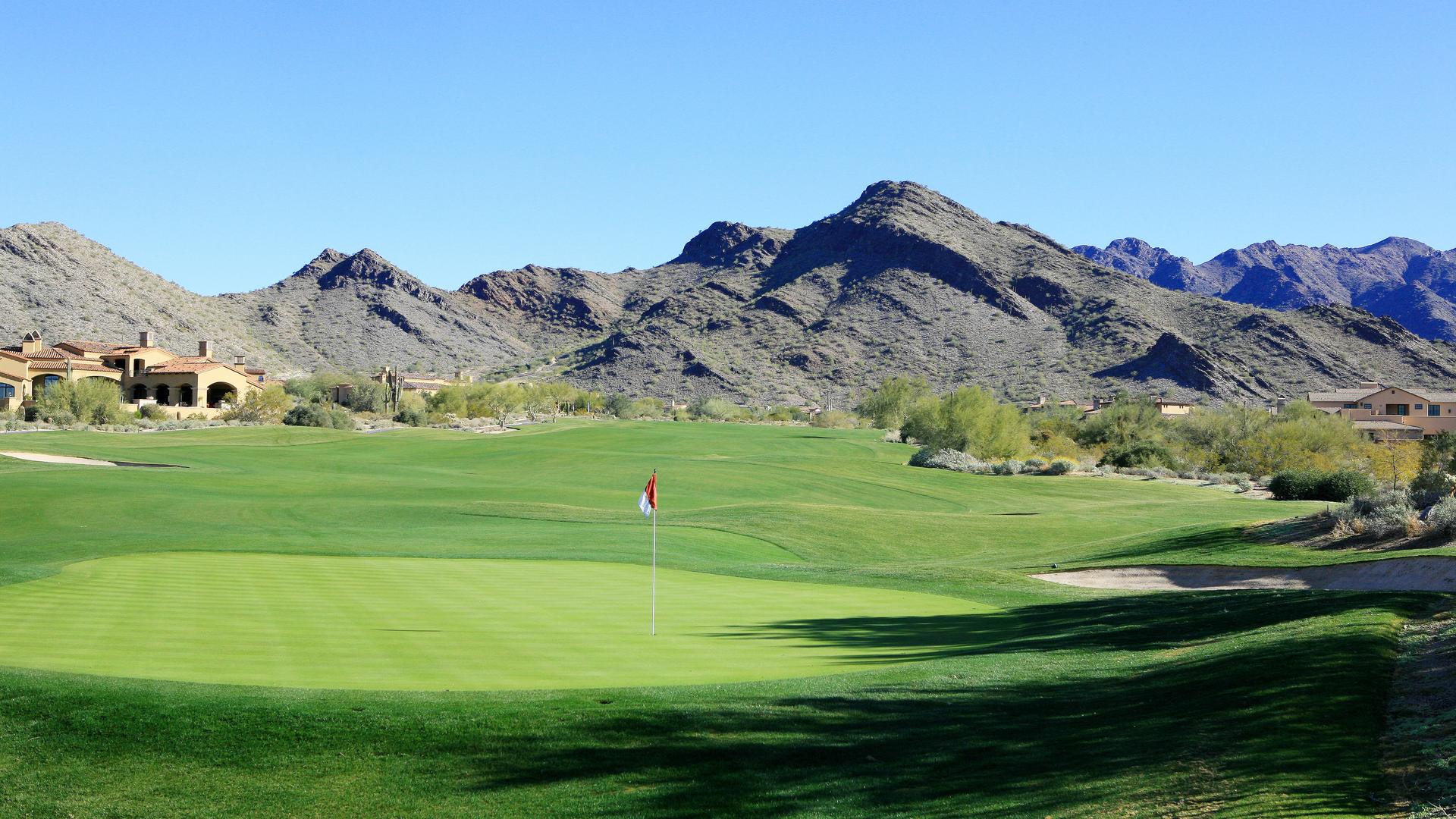
The city also says the Advanced Water Treatment Facility can treat up to 20 million gallons of recycled water a day, and that Scottsdale is not sending that highly purified water into the drinking-water system at this time. Golf irrigation and drinking water are related systems. They are not the same pipe.
What Did Scottsdale Council Discuss on October 20?
On October 20, 2026, the Scottsdale City Council held a water work-study. A Govly summary of that meeting says the discussion covered stored Salt River water, a sixth wastewater pumpback station, Booster Pump Station 10 improvements, a CAP canal connection and advanced water purification. Govly says staff had submitted the pumpback and stored-water projects as requests for the next capital budget, and that no funding or construction approvals were made during the session. Govly reports advanced water purification options estimated at $133 million or $164 million in capital costs, annual operating costs of $6.3 million or $7.3 million, and total present-worth costs of $232 million or $277 million.
The Phoenix Bulletin, in an October 22, 2026 account of the same study session, describes those capital figures as the estimated cost of two purification options without the new pump-back station. The Bulletin says City Manager Greg Caton described the analysis as a way to give the council a better understanding of costs and options before proceeding. It also reports that the council expressed support for including the proposed projects in future funding considerations, and that staff would move forward with project planning, regulatory steps and community input. Read those two accounts together: the meeting put large numbers on the table, and it did not approve the funding.
The Bulletin also reported that Scottsdale Water staff highlighted a potential 17 percent decrease in the city's Central Arizona Project allocation for 2027 if a proposed Lower Basin agreement is finalized, and that Scottsdale would still have more CAP water than it delivered in 2025. The Bulletin says the city delivered approximately 82,600 acre-feet of drinking water in 2025, with total deliveries, including reclaimed water, of about 90,800 acre-feet. That is a supply conversation. It is not a golf-course closure list.
A transcript of the October 20 meeting published by Arizona Record quotes a presenter saying that 23 golf courses receive reclaimed water from the RWDS, and that the supply options being shown would keep sending water there: "We're not taking any of that water back for any of these options, so we're assuming that this all continues." In the same stretch, the presenter cited DC Ranch Country Club as having recently removed 10 acres of turf to be able to save water. I am attributing that turf figure to the presentation, not to a club financial statement I have reviewed. The useful point is the one the presenter put next to the map: the options under discussion were built on the RWDS continuing to serve those courses.
What Do State Groundwater Rules Cover?
The Arizona Department of Water Resources describes golf-course groundwater use on its Fifth Management Plan concepts page. That page says the golf course conservation program in the management plans applies to golf courses that use groundwater, have ten or more acres of water-intensive landscape, and have at least nine holes. It says the final allotment method does not include an allotment for acres over five acres per hole, and that the program includes an effluent adjustment and allotment additions. The page is ADWR's concepts record, including work-group material that uses the Phoenix active management area as an example. It is the right place to see how the state talks about groundwater allotments. It is not a substitute for the allotment on one club's account.
I tell buyers to use it this way. If the course uses groundwater, ask how the allotment is calculated and whether the club is inside it. If the course is on Scottsdale's reclaimed system, start with the city's RWDS description and the club's contract, because that is a different water source than a groundwater allotment. I could not open ADWR's separate commercial-and-industrial page while writing this, so I am not quoting an effluent credit factor from it.
What Should You Ask Before You Buy?
These are the questions I want answered before a client binds themselves to a golf-course view. None of them requires a prediction about Arizona politics.
- Where does the irrigation water come from today? Ask the club whether it is RWDS reclaimed water, groundwater, potable water or a mix. The city's page supports "23 courses in north Scottsdale" as a system fact. It does not identify your course. Listing remarks are not a water contract.
- Who pays for water, operations and capital? For RWDS members, the city says the clubs pay for their water and for 100 percent of the system's collective maintenance, operation and capital costs. Ask whether that shows up in dues, a separate club assessment or both. I am not quoting a dues number.
- What do the financials show? Ask for the current club or association budget, reserves and any pending special assessment tied to the course, the water system or a turf project. Our guide to how HOAs can affect home value is the companion checklist for the association side.
- What do the recorded documents say if play stops? Read the CC&Rs, any golf-course covenant, and the easements. The question is who controls the land, whether a fairway view is a protected right or a current use, and what consent a change would require. I am not your attorney. Have the title company and, when the documents are thick, a real-estate lawyer read them.
- What process would a change have to go through? Kierland is the current example: a private owner, a rezoning, a village planning committee, then the Phoenix Planning Commission and City Council if it advances. Ask what jurisdiction the course you are buying next to actually sits in.
- Is golf included, optional or public? Membership can be mandatory, separate or irrelevant. Troon North is a useful contrast because the club there is public-access, with a resident green-fee discount, which is a different ownership model from a private club. Confirm the model with the club before you fold golf into the purchase price.
I tell my clients I would still tour Grayhawk, DC Ranch, Troon North, Desert Mountain and Silverleaf. I would pause on a specific house if the water source, the payer and the covenants were fuzzy. That is diligence. It is not a forecast that any of those courses will close, and it is not a promise that they will stay as they are.
FAQ: Golf Courses and Water
Are North Scottsdale golf courses being forced to close because of water? I do not have a source that says they are. Axios reported on October 29, 2026, that Attorney General Kris Mayes clarified she has no plans to close golf courses and wants incentives to swap thirsty grass and catch rainwater. A Govly summary of Scottsdale's October 20, 2026 water work-study says no funding or construction approvals were made at that session.
What is being proposed at the Kierland Mesquite course? Axios reported that Host Hotels & Resorts is seeking a Phoenix rezoning to build about 500 condos, houses, townhomes and duplexes on the nine-hole Mesquite course, on 72 acres, and that the club's other two nine-hole courses would remain. Axios said the Paradise Valley Village Planning Committee will consider Copper Residences on Monday. That story is dated October 29, 2026, so that Monday is November 2, 2026. If the committee advances it, Axios said the next steps are the Phoenix Planning Commission and the Phoenix City Council.
How many North Scottsdale golf courses does the city serve with reclaimed water? The City of Scottsdale says that since the early 1990s it has provided non-potable water to 23 golf courses in north Scottsdale through the Reclaimed Water Distribution System, with capacity to deliver 20 million gallons a day to member clubs. The city names Desert Mountain in the history of that system and does not, on that page, list all 23 courses.
Did Scottsdale approve the $133 million or $164 million purification projects? Govly's summary of the October 20, 2026 work-study says those were estimated capital costs for advanced water purification options, along with annual operating costs of $6.3 million or $7.3 million, and that no funding or construction approvals were made. The Phoenix Bulletin describes the figures as two options without the new pump-back station and says the council's support was for future funding discussions.
What should I ask before buying a home on a golf course? Ask the club for the current irrigation source, who pays for water and capital, and for the budget and reserves. Read the CC&Rs and any golf-course covenant for what happens if play stops. Use the Kierland rezoning as a process example, and confirm membership separately from the purchase. I can walk through that list with you before you write.
Author Bio
Darren Tackett is the founder of The Tackett Team at eXp Realty, at 20551 N. Pima Road, Suite 185, Scottsdale, AZ 85255. On a golf-course purchase, I want the water source, the payer and the covenants in writing before the view does the selling.